
Release Date:
09/08/2011
It is hard to forget the shock, confusion, uncertainty and disruption felt in the early days following the attacks on Sept. 11, 2001.
It is hard to forget the shock, confusion, uncertainty and disruption felt in the early days following the attacks on Sept. 11, 2001.
The Baltimore Workforce Funders Collaborative is working with Byte Back, Pass IT On, and the Baltimore Digital Equity Coalition to identify a trainer(s) who will develop and facilitate a trauma-informed care training for up to 15 workforce development nonprofit professionals. The goal of the training will be to increase the capacity of direct service agencies by applying trauma-specific strategies to their normal service deliveries, improving the services provided to clients who have experienced trauma, and advance digital equity.
It is an exciting time for public education in Baltimore.
There is definite irony to the recurring proposals to decrease incentives for charitable giving.
In recognition of this focus and the desire to align funding around housing stability, Maryland Philanthropy Network members, many of whom are part of the Basic Human Needs Affinity Group decided to transform into a new group comprised of private and public funders, currently called Funders Together to End Homelessness – Baltimore.
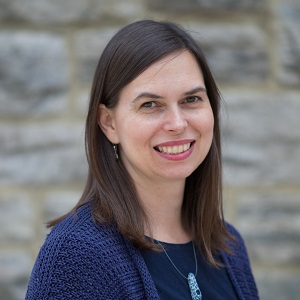 The Board of Directors of Maryland Philanthropy Network (MPN) is pleased to announce the
Join Maryland Philanthropy Network and our speakers for an overview of the American Rescue Plan Act (ARPA) to contextualize the ways funds are being disbursed, including the $350 billion in State and Local Fiscal Recovery Funds (SLFRF). Drawing on ideas found in this Philanthropy News Digest article by Darius Graham of the Harry and Jeanette Weinberg Foundation, we’ll discuss how a greater understanding of priorities and processes in a community can help with allocating SLFRF in ways that inform grantmaking. We will conclude with a dynamic panel discussion with our partners on how funders can support nonprofits, provide community input about public dollars, and address any potential funding gaps.
After almost 65 years of making grants in the Baltimore area and elsewhere the Alvin and Fanny B. Thalheimer Foundation will spend down its remaining funds.
“Foundation Giving for Disability: Priorities and Trends”, a rigorous new study commissioned by the Disability & Philanthropy Forum, is the first study of its kind to map philanthropic giving for disability causes. The report goes beyond big-picture dollar figures to point out key imbalances within philanthropy, most notably the minuscule amount of support and action to advance social justice for people with disabilities across the spectrum of funding.
Sheldon Goldseker, a Baltimore real estate executive and the founding chairman of a foundation that has given millions of dollars to hundreds of local institutions, was remembered this week as a generous, community-minded leader who pursued the betterment of Baltimore without seeking the limelight. He died Friday at 82.
The directory is your local resource to the specific interests and contacts at private foundations and corporate giving programs in central Maryland – including private foundations that do not review proposals. Members of the Maryland Philanthropy Network' provide their own information to simplify your grant research. The directory does not rely on public databases.
Join Maryland Philanthropy Network staff and your philanthropic peers for Economic Opportunity Funders' briefing on the new political environment and its impact on social policy. Together in Arlington, VA, and virtually, funders will network around, learn about, and discuss: what's at stake and in play at the federal and state levels; coordinated efforts underway to shape the budget and tax fights ahead; implications for philanthropy in the short and long term; and strategies for individual and collective action.
In today's environment, nonprofit organizations are faced with numerous challenges, be they financial, administrative, or programmatic.
Nonprofits and foundations must share stories of their successful strategies to address community needs. This is the message Mark Sedway delivered to members of the Maryland Philanthropy Network at our recent annual meeting.
Building off of a successful first round of work and through support from Living Cities, the Annie E. Casey Foundation, and the Goldseker Foundation, the Baltimore Integration Partnership (BIP) launched 2.0 in 2014 to deepen anchor institution’s efforts to support area residents, businesses and communities.
We all benefit when local economies offer equitable, stable jobs. Two new tools are being piloted in Baltimore to enhance the ability of companies and their employees to prosper.
We provide space for our members to connect, learn and share together on how to effectively address racial equity in their work as philanthropy-serving organizations (PSOs), and works to share our members’ learnings with the broader philanthropy field. As part of these efforts, we are pleased to share case stories from our members about their racial equity work.
Three weeks ago, I began my journey as the president of Maryland Philanthropy Network.
Maryland Philanthropy Network joins United Philanthropy Forum signing on to a letter related to understanding how changes to the tax code in Congress impact the charitable sector and what it means for data-driven decision making to have an impact on policy reform. The ask is to include charitable organizations and donors in discussions that impact the sector as soon as possible. This letter was signed onto this as it is in alignment with the broader policy of charitable reform which seems to allow for general support.